

Have you ever stood up after a long call and felt an achy back right away? Does your lower back feel tight after a drive, desk work, or a few hours on the couch? Do you feel fine in the morning, then sore by late afternoon, and you can’t figure out why? When the pain keeps showing up, it’s normal to look online for answers, even typing chiropractor near me at night. Let’s go over what long sitting does to your body, what you can change now, and when hands-on care may help.
Why Sitting Too Much Can Lead to an Achy Back

Sitting feels easy, but your body can pay for it later. When you sit for long periods, your spine is under steady pressure, and key muscles can stop working well. That can lead to stiffness, soreness, and pain that comes back again and again.
Increased Spinal Pressure
When you sit and slouch, your lower back rounds and your hips roll back. That shifts stress onto the discs and joints in your spine. Over time, that stress can lead to back pain during long meetings, long drives, or long workdays. Many people notice the same pattern: sitting makes it worse, walking makes it better.
Weak Core And Glute Muscles
Your core and glutes help stabilize your spine. When you sit a lot, these muscles get lazy and weaker. Then your lower back tries to do extra work, even during simple things like standing up, carrying a bag, or climbing stairs. This can turn mild soreness into a recurring problem, which is why some people seek a chiropractor for back pain when home remedies stop helping.
Reduced Circulation And Joint Stiffness
Your body needs movement to stay loose. When you sit too long, blood flow slows down, and your hips get tight. Your spine can feel stiff and stuck when you finally stand. That is a common reason an achy back shows up at the end of the day. Small breaks help because they bring blood flow back and loosen tight areas.
Signs Your Back Pain Might Be Caused By Too Much Sitting

Sitting pain often follows a schedule. Usually, you can alter the pattern if you can identify it. Early action can prevent a short-term issue from becoming a long-term problem.
Common Symptoms
Many people feel a dull ache that builds during the workday. They feel stiff when they stand up from a chair. They may also feel tight hips or a sore lower back after driving. If a short walk helps, your pain may be linked to long periods of sitting and poor posture.
Recurring Lower Back Pain
If the same tasks keep causing pain, your body is reacting to the same stress again and again. Desk work, long commutes, and couch time can all trigger it. This often happens when hip flexors are tight, core strength is low, and the spine does not move well. The good news is that these are common problems, and they often respond well to simple daily steps.
When To Seek Professional Help
Get help if pain shoots into your hip or leg, or if you feel tingling, numbness, or weakness. Get help if bending, lifting, or twisting feels hard or unsafe. Also, get help if pain keeps you up at night. A chiropractor for back pain can check how your joints move, how your muscles support you, and what may be driving your symptoms.
Everyday Habits That Make Back Pain Worse

Most people think the chair is the problem. Often, it’s your habits during the day. A few common habits can keep pain going, even if you stretch sometimes or work out on weekends.
Poor Desk Ergonomics
A low screen makes you look down and lean forward. A chair without support can make your lower back sore. A keyboard that’s too far away can pull your shoulders forward. These small things add strain each hour you work. A few changes, such as raising your screen and adding lumbar support, can reduce daily stress and ease symptoms.
Long Periods Of Sitting Without Movement
Even “good posture” gets worse if you hold it too long. Your joints and muscles need small breaks. Sitting for hours can make you stiff and less able to handle normal stress. If you feel okay early in the day but worse after long sitting blocks, your body is asking for regular movement.
Forward Head And Shoulder Posture
Phones and laptops often pull the head forward. Shoulders round and the upper back tightens. This can spread tension across the spine and into the lower back. Over time, your body may feel sore in several places, not just one. A simple posture reset, along with a better screen height, can reduce stress on the entire back.
Simple Ways To Reduce Back Pain From Sitting
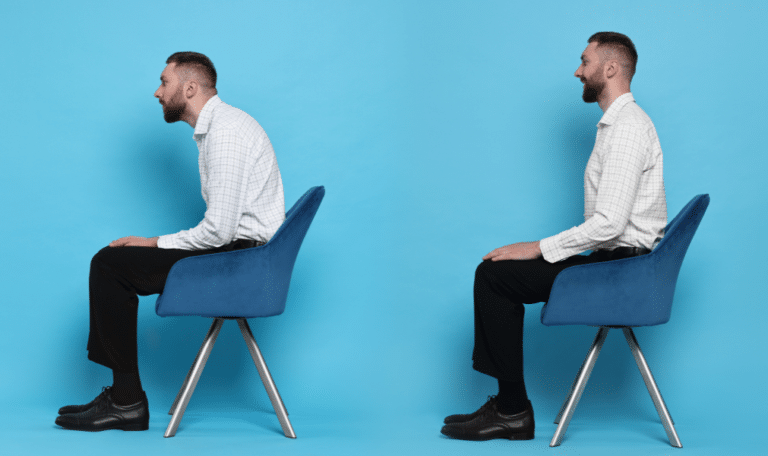
You do not need a perfect plan. You need small steps you can repeat. The goal is to take pressure off your spine, keep your hips loose, and help support your muscles throughout the day.
Move Every 30–60 Minutes
Stand up often, even for one or two minutes. Walk to get water. Do a few gentle stretches. Take a short lap around the room. These small breaks reduce pressure on the spine and improve blood flow.
Improve Your Sitting Posture
Try sitting with your ribs over your hips. Keep your shoulders relaxed. Keep your chin slightly back, not jutting forward. Put both feet flat on the floor. Sit back into the chair so your hips are supported. This reduces strain and can help you feel better during the day.
Optimize Your Workstation Setup
Set up your space so your body doesn’t fight it all day. Place the top of your screen near eye level. Bring your keyboard and mouse close so your elbows stay by your sides. Add a small cushion to support your low back if needed. These changes can lower daily strain and help prevent flare-ups.
Try Dynamic Sitting Or Standing Desks
Your spine likes change. Alternate between standing and sitting during the day if your workstation is standing. If you do not have one, you can still change positions. Stand during phone calls. Walk for one minute between tasks. Shift how you sit. These small changes can help your back feel less stiff.
Exercises That Help Prevent Lower Back Pain

Exercise can help a lot, but it must match the problem. For sitting pain, most people need a stronger core and hips, plus better mobility through tight areas. Start slow, focus on form, and build over time.
Core Strengthening
Core work helps stabilize your spine. Good options include dead bugs, bird dogs, and plank variations you can do with control. These moves train your trunk to support your back during daily tasks like lifting, carrying, and standing up from a chair. Short sessions done often can make a big difference.
Glute And Hamstring Activation
Your glutes help control your pelvis, which, in turn, affects your lower back. When the glutes are weak, the lower back often has to work too hard. Glute bridges, hip hinges, and step-ups can rebuild support. Stronger hips can mean fewer sore days after long periods of sitting.
Mobility And Stretching Exercises
Sitting often tightens hip flexors and limits mid-back movement. When that happens, the lower back may move too much, leading to irritation. Gentle hip flexor stretches, hamstring mobility, and thoracic rotations can help restore balance. Pair stretching with strength work to help your body hold the gains.
How Chiropractic Care Can Relieve Back Pain

When pain keeps coming back, a focused checkup can help you stop guessing. Chiropractic care can help restore joint motion, reduce irritation, and guide a plan that supports long-term progress.
Spinal Adjustments For Alignment
Adjustments can help joints move better and feel less restricted. When motion improves, muscles often relax, and the body may feel less guarded. Many people find it easier to stand tall and move freely after care. A good plan also includes guidance for what to do at home.
Personalized Rehabilitation Plans
Lasting relief often comes from a clear plan. That plan may include posture coaching, simple mobility drills, strength exercises, and workstation changes. It should match your daily life, not an ideal routine you can’t follow. If your symptoms keep cycling, structure and steady progress can help break the pattern.
Drug-Free Pain Management
Many people want conservative care before trying stronger options. Chiropractic care, exercise, and supportive therapies can help improve function and comfort for those who want to do so. If you have recurring stiffness and an achy back that returns each week, a drug-free approach may fit your goals.
When To See A Chiropractor

There’s a point where you want a clear answer and a plan that makes sense. If your pain affects work, sleep, exercise, or mood, getting help can save time and stress.
Persistent Pain That Doesn’t Improve
If pain lasts for weeks, keeps returning, or limits your daily routine, consider an evaluation. This is often when people search chiropractor near me because they want a real plan, not random tips. Early care can help you get ahead of the problem and prevent it from getting stuck.
Pain After An Injury Or Accident
Injuries can change how you move, even if you feel okay at first. Back pain may subsequently develop as a result of compensatory patterns following a car accident, sports injury, or fall. Getting checked after an injury can help you recover fully and return to normal activity with confidence.
Finding The Right Chiropractor Near You
Choosing a clinic is about fit and trust. Many people search for a “best chiropractor near me” because they want care they can rely on and a plan they understand. Wherever you look, choose a clinic that explains findings clearly and supports you with both hands-on care and rehab guidance.
How Align Health & Wellness Helps Patients Recover From Back Pain

At Align Health & Wellness, we help patients move and feel better with a whole-person approach. Our clinic focuses on non-invasive rehab, with care designed to support recovery without drugs or surgery.
Our Integrated Approach To Back Pain Treatment
We bring together services including chiropractic care, physical therapy, and acupuncture. This helps us address several common causes of pain simultaneously, such as stiffness, weakness, and inflammation. Back pain often has several drivers, so a connected plan can help you make steady progress.
Personalized Care Plans For Every Patient
Your job, habits, and goals matter. We tailor care to your condition and your daily routine. We look at posture, movement patterns, and the habits that tend to trigger symptoms. If you have been searching chiropractor near me because you want clear direction, we help you understand what’s happening and what steps to take next.
Treatment For Injuries, Chronic Pain, And Mobility Problems
We help patients with many common spine issues, including disc-related symptoms and accident-related strain. If symptoms started after an auto accident, we offer accident injury rehab focused on restoring movement and function. When needed, we combine hands-on care with therapeutic exercise so you can return to normal activities with better strength and control.
Modern Therapies That Support Faster Healing
Along with chiropractic and rehab-based exercise, we offer advanced options, including spinal decompression therapy and MLS laser therapy. These non-invasive tools can support healing and help reduce inflammation while you rebuild strength and mobility. We can also add stretching programs and pain-management strategies that fit your comfort level and progress.
Conclusion
Long sitting periods can lead to stiffness, weaker support muscles, and steady pressure that shows up as an achy back. Helpful changes include movement breaks, a better workstation setup, and core and hip strength work. When symptoms keep returning, a professional evaluation can give you clarity and a plan you can follow. Contact Align Health & Wellness to schedule an evaluation and build a plan tailored to your routine and goals.
FAQs About Achy Back
Can back pain be caused by sitting too much?
Yes, long sitting time increases stress on the spine and reduces muscle support, which can trigger discomfort. At Align Health & Wellness, we help our patients lower sitting strain with chiropractic care, rehab exercises, and posture guidance.
What are three red flags of back pain?
Radiating pain with numbness or weakness, severe pain after injury, or loss of bladder or bowel control needs prompt medical evaluation. We help our patients understand what symptoms may mean and guide them toward the right next step.
What are the “Big 3” exercises for lower back pain?
Modified curl-ups, side planks, and bird dogs are common exercises for building spinal stability. We coach our patients on form and tailor progressions so the exercises support recovery without flare-ups.
What vitamins help with back pain?
Vitamin D, B12, magnesium, and omega-3s can support bone, nerve, and muscle health, but they don’t fix movement causes alone. We help our patients pair lifestyle support with movement, rehab, and hands-on care for better results.
How can you fix back pain from sitting?
Take breaks every 30–60 minutes, improve your setup, and strengthen the core and hips to reduce repeated strain. At Align Health & Wellness, we build a plan around your routine so it feels realistic to follow.
How do you know if back pain is serious?
It may be serious if it lasts for weeks, gets worse, spreads into the legs, or causes numbness, weakness, or significant limitations in daily life. We help our patients assess what’s going on and choose a safe plan, starting with an evaluation and clear recommendations.